Depot Dollars is our free rewards program—created to give you more value every time you shop at ArchitecturalDepot.com. With every qualifying purchase, you earn Depot Dollars that can be applied to future orders during checkout. Simple, automatic, and rewarding.
Urethane corbels, brackets, rafter tails, braces, and outlookers for decorative exterior and interior applications, with custom work available on most profiles.
Contact us to discuss custom sizing, profiles, or project quantities.
Urethane corbels, brackets, rafter tails, braces, and outlookers for decorative exterior and interior applications, with custom work available on most profiles.
Contact us to discuss custom sizing, profiles, or project quantities.
Urethane vs. Wood for Exterior Corbels and Brackets
Wood corbels and brackets are a proven exterior material in
the right conditions, but they require consistent finishing and maintenance to
hold up over time. Left unfinished or under-maintained, wood will absorb
moisture, swell at joints, crack along the grain, and eventually rot. In
high-exposure locations, that maintenance cycle can be demanding.
Urethane exterior corbels and brackets eliminate that cycle
entirely. The material does not absorb moisture, does not provide a food source
for insects, and does not expand and contract with humidity the way wood does.
Once installed and painted, urethane holds its shape and finish with minimal
upkeep. For porches, gable ends, eave lines, and other exterior locations where
the detail needs to perform for decades without intervention, urethane is the
practical spec.
For interior applications including mantel surrounds, range
hoods, and built-in cabinetry, urethane corbels deliver the same ornamental
detail as carved wood at a lower cost and weight. Foam corbels and foam
brackets are terms sometimes used to describe urethane products; the core
material is the same, and performance characteristics apply equally.
Urethane Corbels and Brackets by Application
Porch corbels and porch brackets are among the most
visible exterior details on a home. Scale and profile matter: a bracket that is
undersized for the post or beam it supports reads as a decorative afterthought
rather than an integrated architectural element. Urethane porch brackets are
available in a wide range of sizes and profiles to suit everything from simple
Victorian to elaborate craftsman detailing.
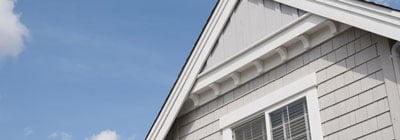
Gable brackets and exterior gable corbels are
installed at the peak of a gable end or along the rake line to reinforce the
roofline detail. They are a defining feature of craftsman, Victorian, and
farmhouse architecture. Because gable brackets are typically installed at
height and in exposed conditions, urethane is the standard material
recommendation: lightweight enough for easier installation and durable enough
to perform without regular maintenance.
Rafter tails and urethane braces are installed at the
eave line to replicate or extend the look of exposed roof framing. Decorative
rafter tails can be applied to an existing structure to achieve a timber-frame
or craftsman eave detail without a framing change. Urethane braces provide angular
support detail at post-to-beam connections and pergola structures.
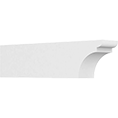
Outlookers feature a wide, thin back-chord that lays
flat against the structure over a longer run, distributing the connection
across a larger bearing surface. They are commonly used at gable ends and eave
lines where that extended bearing improves both the look and the attachment.
Gingerbread Brackets and Victorian Trim
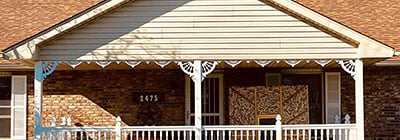
Gingerbread brackets and Victorian brackets are among the
most ornate profiles in the decorative trim category. Characterized by
intricate pierced and scrolled patterns drawn from Victorian-era architectural
detailing, these brackets are a defining feature of Queen Anne, Italianate, and
folk Victorian homes.
Urethane is an ideal material for gingerbread trim. The
mold-forming process captures the fine detail of scrollwork and pierced
patterns precisely, producing a result that is difficult to replicate in wood
without significant hand carving. Because the material is lightweight and
weather resistant, gingerbread brackets can be installed in fully exposed
exterior locations without the maintenance burden that painted wood gingerbread
demands.
Custom Urethane Corbels and Brackets
Because urethane is mold-formed, producing a custom profile
requires a mold, which makes fully bespoke designs more involved than custom
sizing in a cut material like wood. That said, custom sizing within existing
profiles is available, and non-standard configurations can be discussed
depending on the scope of the project. Contact us with your dimensions and
project details to confirm what is possible.
Finishing Urethane Corbels and Brackets
All urethane corbels and brackets ship pre-primed and must
be finish-painted before or immediately after installation. Finishing is not
optional: urethane is not UV stable in its raw or primed state, and unfinished
or unprotected urethane will degrade with sun exposure over time. A quality
exterior latex paint rated for trim provides both the color match and the UV
protection the material requires for long-term exterior performance.
Because the products arrive pre-primed, no additional primer
coat is needed in most cases. Apply the finish coat directly over the factory
prime. For interior applications, a standard interior latex paint is
appropriate; UV protection is not a factor indoors, but finishing is still
recommended to achieve a consistent appearance with surrounding trim and
millwork.
FAQ
Are urethane corbels and brackets suitable for exterior
use? Yes. Urethane is weather resistant, impervious to moisture
infiltration, and will not rot, crack, split, or attract insects. It is one of
the most practical materials for exterior decorative trim applications,
particularly in locations where wood would require frequent maintenance or
regular refinishing. All products must be finish-painted after installation to
protect against UV degradation.
What is the difference between urethane and polyurethane
corbels? The terms are used interchangeably. Polyurethane is the full
chemical name; urethane is the commonly used shorthand. The product and its
performance characteristics are the same regardless of which term is used.
Are foam corbels the same as urethane corbels? Yes.
Foam corbels and foam brackets are informal terms sometimes used to describe
urethane products. The core material is the same, and all performance
characteristics including weather resistance, lightweight installation, and
paint compatibility apply equally.
How are urethane corbels and brackets installed?
Urethane corbels and brackets are typically fastened using construction
adhesive, screws, or a combination of both depending on the application and the
substrate. Because they are lightweight, one-person installation is
straightforward in most situations. For exterior installations, fasteners
should be corrosion-resistant to prevent staining over time.
Do urethane corbels need to be painted? Yes, and for
exterior installations it is required. Urethane is not UV stable without a
protective finish coat, and unfinished or unprotected urethane will degrade
with sun exposure over time. All products ship pre-primed, so no additional
primer is needed; apply a quality exterior latex trim paint directly over the
factory prime. For interior applications, a standard interior latex paint is
appropriate. Finishing is recommended indoors as well to match surrounding trim
and achieve a consistent appearance.
What custom options are available? Custom sizing
within existing profiles is available on most products. Fully bespoke designs
are more involved given the mold-forming process but can be discussed for
larger project scopes. Contact us with your dimensions and project details to
confirm what is possible.
How do urethane rafter tails and outlookers differ from
standard brackets? Rafter tails replicate the look of exposed roof rafter
ends at the eave line and are applied to the structure to achieve a
timber-frame or craftsman eave detail without a framing change. Outlookers use
a wide, thin back-chord that lays flat against the structure over a longer run,
distributing the connection across a larger bearing surface. Standard brackets
concentrate their connection at a single point; outlookers spread it across the
face of the structure, which suits gable end and eave applications where that
extended bearing is an advantage.
Are gingerbread brackets difficult to install? No. Urethane gingerbread brackets are lightweight and install using the same methods as standard urethane brackets: construction adhesive, corrosion-resistant fasteners, or both. The intricate profile can make positioning and alignment more involved than a simple bracket, but the installation method itself is straightforward.
Get the latest product updates, design inspiration and exclusive offers.
Exclusive offers, updates & inspiration
For over 20 years, we've been the trusted source for premium architectural millwork and building elements. Quality craftsmanship meets exceptional service.